Over the past year, the bourbon secondary market has been telling two very different stories.
Some bottles have lost a third of their value, while others have quietly appreciated dramatically. Meanwhile, the most iconic labels, like for instance the Pappy Van Winkle releases—have done something different altogether: they’ve largely held their value.
Using Bourboneur’s secondary market tracking data from November 24, 2024, through today, we analyzed daily pricing across a range of highly sought-after bottles. The results suggest the bourbon resale market isn’t collapsing, it’s maturing.
Collectors are becoming more selective about what deserves a premium.
The Bourboneur Secondary Market Index (BSMI) captures the broader movement of resale prices across a range of collectible bottles focused on 30 of the top movers trading hands today.
Early in the dataset we see a clear market correction, with prices falling before gradually recovering through much of 2025. Prior to formally tracking this much more closely, 2024 saw a yearlong drop - to the tune of around 11 percent, so we're still down - but recovering.
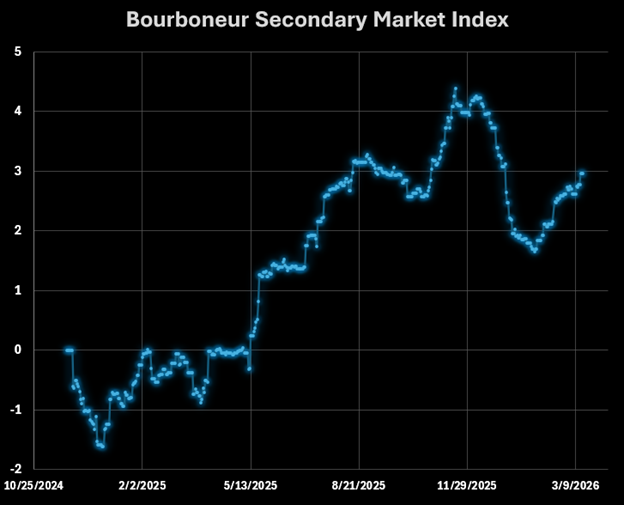
This pattern mirrors what many collectors have been feeling anecdotally. The explosive growth in bourbon prices during the late 2010s and early 2020s created a wave of speculative buying. As more premium releases entered the market, prices for some bottles began to normalize.
But normalization doesn’t mean collapse.
Instead, the market appears to be entering a phase where true collector demand matters more than hype.
While the broader market stabilized, several bottles saw significant price declines. One of the most notable moves comes from Weller Single Barrel, which experienced a substantial correction during the period tracked.
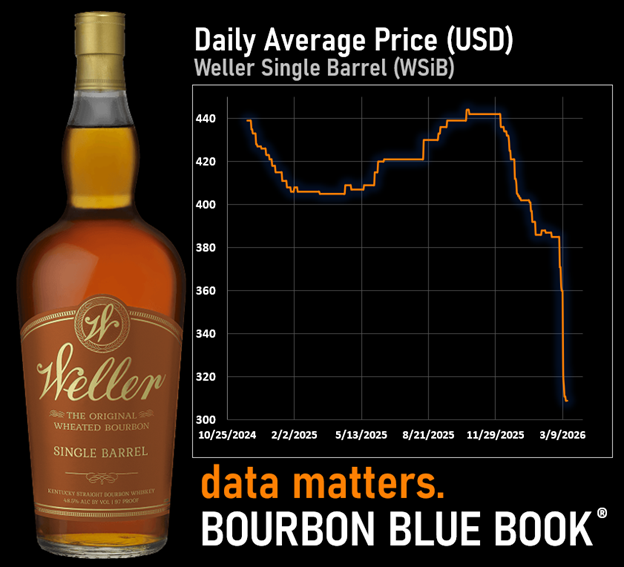
Historically, Weller releases were almost guaranteed to rise in secondary value due to strong demand for Buffalo Trace’s wheated bourbon profile. But as more limited releases and private barrels hit the market, demand has become more fragmented.
Collectors who once chased every Weller release are now being more selective.
This trend suggests the market is shifting from brand-driven speculation toward bottle-specific value.
Despite the headlines about cooling bourbon prices, some bottles are doing extremely well. Here’s a look at some of the emerging unicorns.
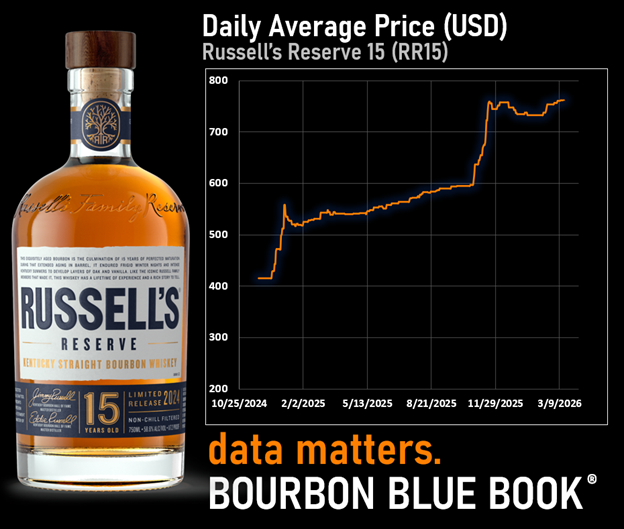
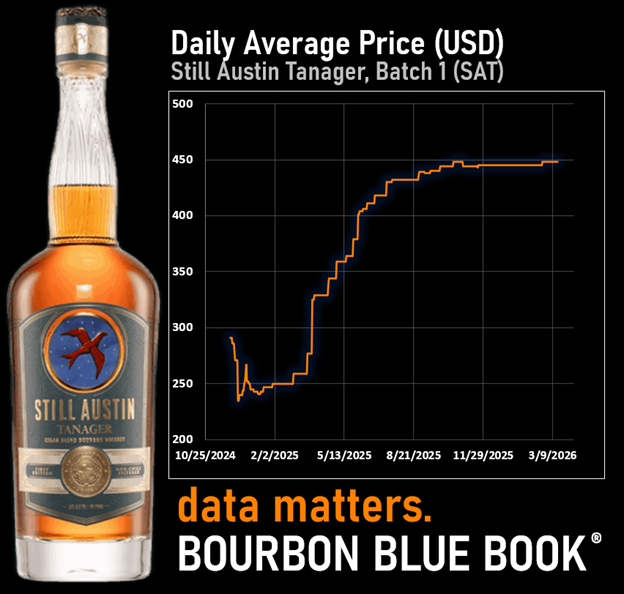
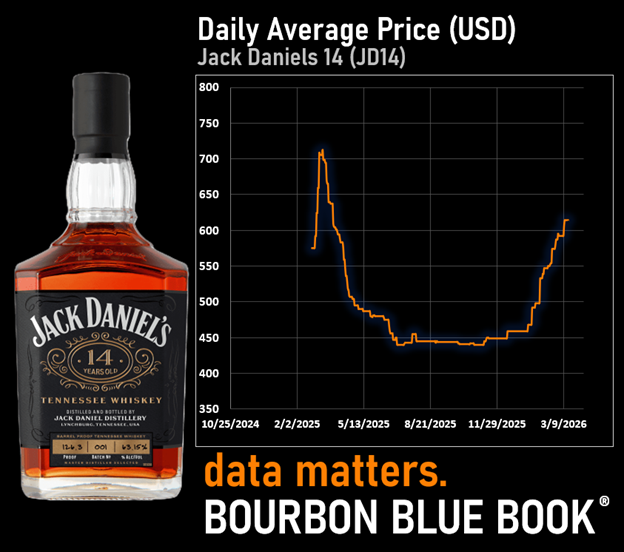
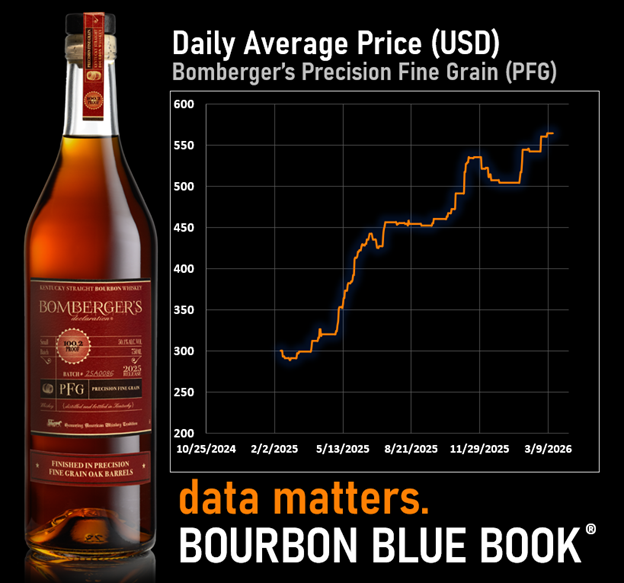
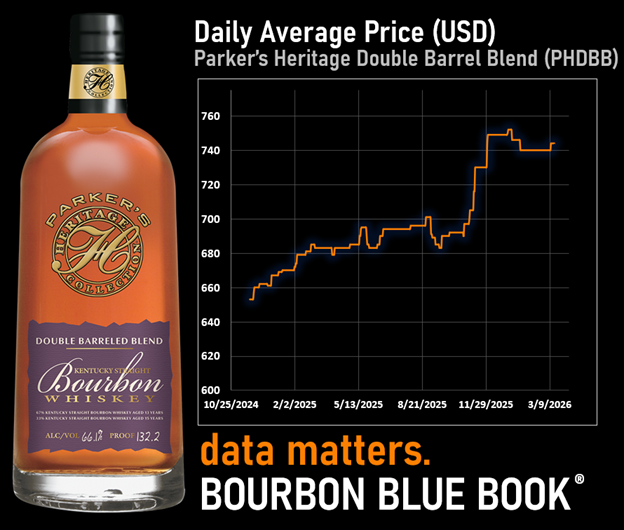
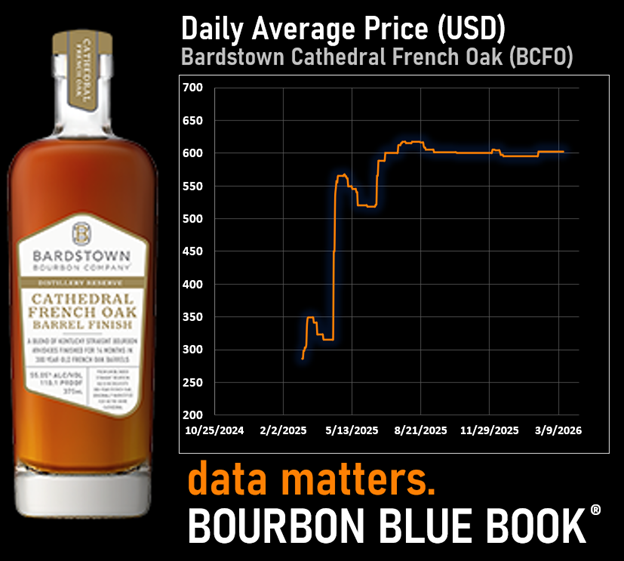
In many cases, it comes down to a combination of strong reviews, limited availability, and brand momentum. The bottles on this list in particular benefited from exceptional reception among enthusiasts and critics alike.
When a bottle earns a reputation as both rare and outstanding, it can transition from release hype to long-term collectible status.
Perhaps the most interesting story in the data is what happened with the Pappy Van Winkle lineup.
Prices for the Old Rip, Lot B, 15, 20, and 23 year releases have moved somewhat during the period, but compared to other bottles in the market, the overall trend is relatively stable.
Even when prices soften slightly, they tend to settle into a durable range rather than collapsing.
This reinforces something longtime collectors already understand:
Pappy Van Winkle behaves less like a speculative release and more like a blue-chip collectible within the bourbon world.
While newer releases may spike and fall, the Pappy brand has decades of cultural capital supporting its value.
Taken together, the data suggests the bourbon secondary market is becoming more sophisticated.
Instead of a rising tide lifting every bottle, we’re seeing three distinct categories emerge.
These tend to maintain long-term value even when the market softens.
Examples include the Pappy Van Winkle lineup.
These bottles gain value after release because they combine scarcity with exceptional reputation.
Examples include Russell’s Reserve 15 and Elijah Craig C923.
These see early price spikes but later correct as supply, competition, or shifting tastes reduce demand.
Examples include some Weller releases and certain limited modern editions.
The biggest takeaway from the data is that the bourbon market isn’t disappearing, it’s evolving.
Scarcity alone is no longer enough to drive long-term appreciation. Instead, collectors appear to be rewarding bottles that combine:
• strong brand heritage
• exceptional quality
• genuine rarity
• and lasting enthusiast demand
For collectors and investors alike, the lesson is clear.
The bourbon secondary market is no longer just about chasing hype.
It’s about identifying which bottles truly deserve to become legends.
If 2025 taught us anything, it’s that the bourbon market doesn’t pause. Drop season is now year-round, bottles hit the secondary before receipts cool, and the gap between hype and heritage has never been wider.
Navigating that requires more than instinct—it requires truth in numbers. The same approach that recently earned Bourboneur recognition from Forbes.
That’s why we built the Bourbon Blue Book®. With live, verified secondary sales data on over 10,000 bottles, it exists to help you avoid overpaying for shelf noise—or missing the undervalued gems hiding in plain sight.
Inside the Bourboneur app, you get:
• Real-Time Market Data – No guesswork. Just what bottles are actually selling for.
• The Blue Book Advantage – At $3/month or $25/year, it pays for itself the first time you walk away from a bad deal.
• A Growing Community – Thousands of collectors using data—not hype—to stay Whiskey-Wise.
Whether you’re hunting a 16-year Old Commonwealth or pricing a fair trade, don’t fly blind in 2026.
📲 Download the app on iOS or Android.
📩 Subscribe below for our weekly insider email.
📷 Follow along on Instagram, Facebook, and TikTok.
Real data. Real value. Real community.
That’s Bourboneur.
.png)


.png)
.png)
0 Comments