Over the past few years, bourbon has gone through a noticeable shift. Not long ago, the market was dominated by scarcity, age statements, and legacy distilleries. If a bottle was hard to find, it was valuable—simple as that.
That’s no longer the full picture.
In 2026, we’re seeing the rise of something different: what can only really be described as “meme bourbon.” Bottles that gain traction not because of pedigree, but because they’re unusual, viral, or culturally resonant in a way that traditional bourbon never tried to be.
And surprisingly, some of them are performing.
“Meme bourbon” isn’t a formal category—but you know it when you see it.
It typically has at least one of the following:
• A novelty hook (unexpected flavor, branding, or origin)
• Viral exposure (TikTok, Reddit, or mainstream media)
• A cultural tie-in (nostalgia, humor, or crossover appeal)
• Limited or confusing availability
These aren’t bottles built on a 200-year legacy. They’re built for attention.
And in today’s market, attention has value.
To understand why this is happening, you have to zoom out.
The bourbon boom of the 2010s and early 2020s was driven by scarcity. Limited releases, allocated drops, and “unicorn” bottles created a simple dynamic: if you could find it, you were ahead.
But that model has softened.
• Supply has increased
• Distribution has improved
• Secondary prices have cooled
As a result, scarcity alone isn’t enough anymore.
So what replaces it?
Story. Novelty. Shareability.
Meme bourbon thrives in that gap.
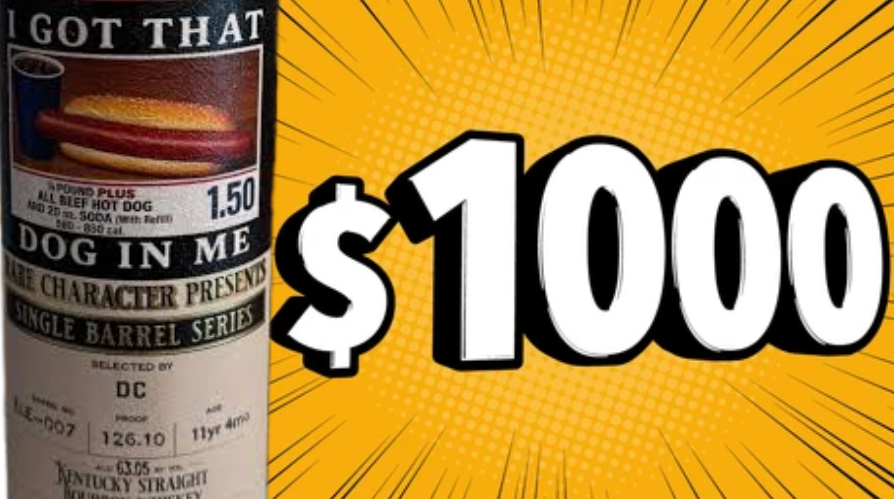
One of the clearest recent examples: a novelty bourbon release tied to a mass retailer that quickly gained traction online, flipping for multiples of its retail price.
Not because it was the best bourbon of the year.
Not because it was the rarest.
Because it was interesting.
It became a conversation piece:
• “Have you seen this?”
• “Is it actually good?”
• “Why is this selling for 5x?”
That curiosity loop—fueled by social media—is powerful. And it’s something traditional bourbon marketing hasn’t historically tapped into.
There’s a shift happening that’s easy to miss if you’re only watching traditional metrics.
In the past:
Allocation determined visibility → visibility drove demand → demand drove price
Now:
Visibility drives demand → demand creates perceived scarcity → scarcity drives price
That’s a completely different model.
A bottle doesn’t need to start rare. It just needs to go viral.
Once that happens, the market reacts:
• People buy “just in case”
• Listings appear on secondary markets
• Prices spike temporarily
We’ve seen this pattern before in other markets—sneakers, trading cards, even NFTs. Bourbon is just catching up.
Here’s where things get more complicated—and where Bourboneur users should pay attention.
Most meme bourbons follow a similar lifecycle:
1. Discovery – A bottle gains attention (social or media-driven)
2. Acceleration – Prices spike as demand surges
3. Saturation – More bottles hit the market
4. Correction – Prices fall back toward reality
Very few make it past step 2 with sustained value.
That doesn’t mean there’s no opportunity—it just means timing matters more than ever.
Unlike traditional “blue chip” bottles, meme bourbons:
• Are less predictable
• Have weaker historical comps
• Depend heavily on continued attention
In other words: they behave more like trades than holds.
This trend isn’t necessarily a bad thing. In fact, it’s opening the door for a different kind of collector engagement.
But it does require a shift in mindset.
1. Not Every Spike Is a Signal
Just because a bottle jumps in value doesn’t mean it’s fundamentally strong. Sometimes it just means it’s trending.
2. Liquidity Matters More
If you’re buying into hype, you need to think about exit timing. The window can be short.
3. Your Collection Strategy Needs Balance
There’s still a place for:
• Proven performers
• Legacy releases
• Long-term holds
Meme bourbon can complement that—but probably shouldn’t define it.
It would be easy to dismiss this as a phase, but there are a few reasons it’s likely to stick around:
• Social media continues to influence buying behavior
• New consumers are entering bourbon from outside traditional channels
• Distilleries are experimenting more with branding and releases
And most importantly:
The market is looking for something new.
After years of chasing the same bottles, collectors are open to different kinds of excitement—even if it comes from unexpected places.
Meme bourbon is a reflection of where the market is today: less driven by scarcity, more driven by attention.
For collectors, that creates both opportunity and risk.
The key isn’t to ignore it—but to understand it.
Because whether it’s a novelty release, a viral bottle, or something completely unexpected, one thing is clear:
The definition of “valuable bourbon” is evolving.
And the bottles driving the conversation aren’t always the ones you’d expect.
If 2025 taught us anything, it’s that the bourbon market doesn’t pause. Drop season is now year-round, bottles hit the secondary before receipts cool, and the gap between hype and heritage has never been wider.
Navigating that requires more than instinct—it requires truth in numbers. The same approach that recently earned Bourboneur recognition from Forbes.
That’s why we built the Bourbon Blue Book®. With live, verified secondary sales data on over 10,000 bottles, it exists to help you avoid overpaying for shelf noise—or missing the undervalued gems hiding in plain sight.
Inside the Bourboneur app, you get:
• Real-Time Market Data – No guesswork. Just what bottles are actually selling for.
• The Blue Book Advantage – At $3/month or $25/year, it pays for itself the first time you walk away from a bad deal.
• A Growing Community – Thousands of collectors using data—not hype—to stay Whiskey-Wise.
Whether you’re hunting a 16-year Old Commonwealth or pricing a fair trade, don’t fly blind in 2026.
📲 Download the app on iOS or Android.
📩 Subscribe below for our weekly insider email.
📷 Follow along on Instagram, Facebook, and TikTok.
That’s Bourboneur.
.png)


.png)
.png)
0 Comments