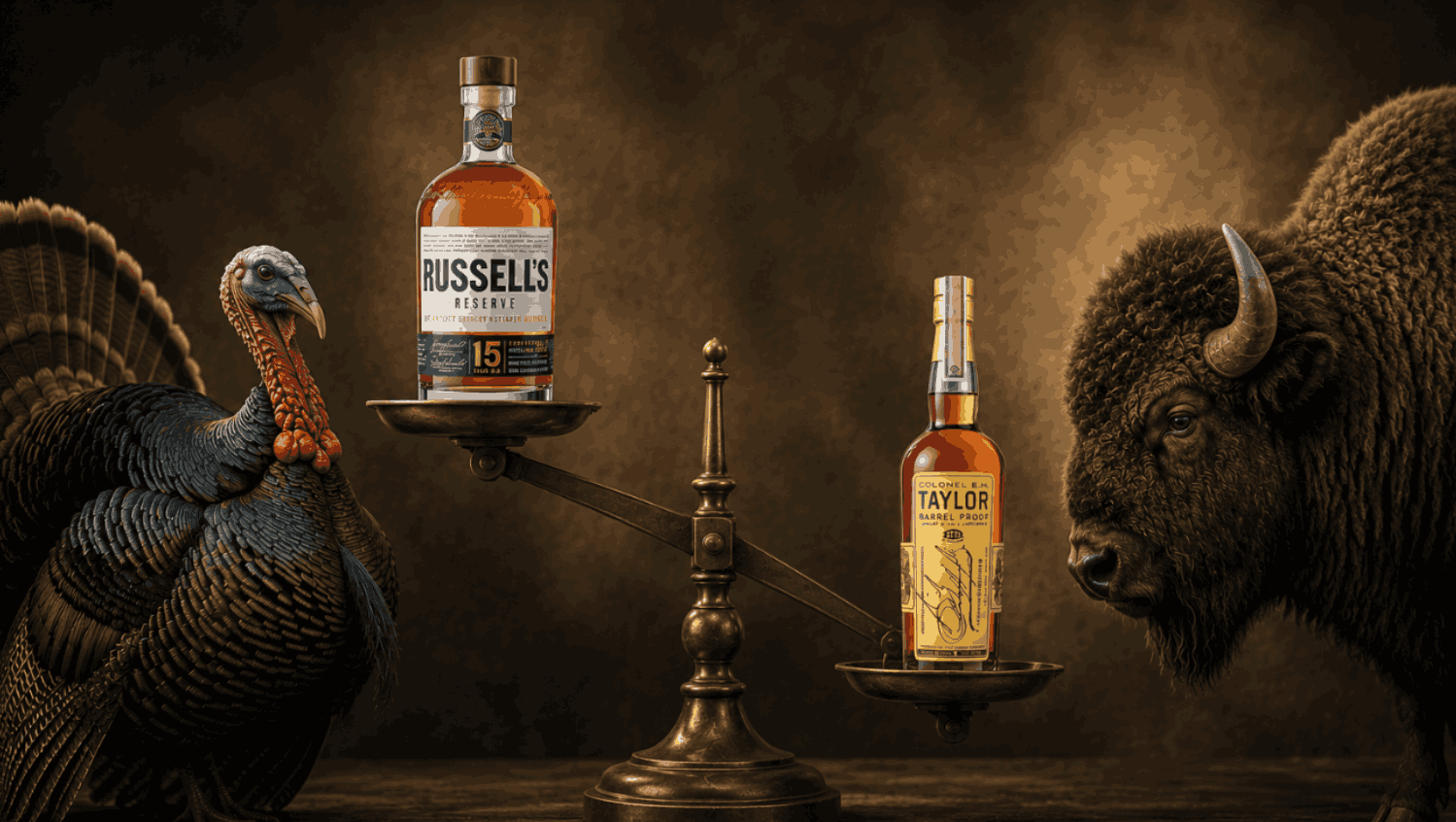
One of the most common assumptions in bourbon collecting is that allocation equals appreciation.
For years, it often felt true. A bottle became difficult to find. Demand increased. Secondary prices climbed. Collectors watched values rise and began to associate scarcity with future appreciation. If something was allocated, many assumed it would eventually become more valuable.
But over the last two and a half years, the bourbon market has been quietly testing that assumption.
To better understand what has changed, we analyzed pricing data across 30 representative Bourbon Blue Book® bottles spanning December 2023 through June 2026. The results reveal a market that appears to be growing more selective. Not every allocated bottle appreciated. Not every highly sought-after release declined. And perhaps most importantly, allocation alone no longer appears to be enough.
At first glance, this observation seems obvious. Of course some bottles go up while others go down.
But for much of the bourbon boom, collectors often behaved as though allocation itself created value. Scarcity became the story. The data suggests something different.
Over the study period, some highly allocated bottles appreciated significantly. Others experienced meaningful declines despite remaining difficult to purchase at retail. What makes this interesting isn't that there were winners and losers. It's that the market became increasingly willing to distinguish between them. In other words, collectors appear to be becoming more selective.
One of the more interesting findings is that the strongest performers weren't concentrated within a single distillery or producer.
Among the better-performing bottles were releases such as Parker's Heritage 16 Double Barreled, Russell's Reserve 13 Batch 5, Jack Daniel's 10 Year Batch 1, and Wild Turkey Generations.
Different distilleries. Different release strategies. Different fan bases.
Yet each managed to outperform much of the broader allocated bourbon market. The common thread wasn't geography, ownership, or marketing. It appears to have been collector demand. These were bottles enthusiasts continued to actively seek out long after their initial release.
And nowhere is the difference between demand and premium more apparent than when examining the products that have dominated bourbon collecting for the better part of a decade: Buffalo Trace.
Perhaps the most recognizable pattern in the data involved several Buffalo Trace products.
For years, Buffalo Trace has been the center of gravity in bourbon collecting. Weller, EH Taylor, Blanton's, Elmer T. Lee, George T. Stagg, and the Van Winkle lineup have shaped much of the modern secondary market and, in many ways, helped define the bourbon boom itself.
That's what makes the data so interesting.
Several Buffalo Trace products experienced meaningful declines during the study period despite remaining highly desirable and difficult to find at retail. This doesn't suggest collectors stopped wanting these bottles. Far from it. Many remain among the most sought-after bottles in American whiskey.
Instead, the data suggests something different: the premium collectors were willing to pay during the height of the bourbon boom appears to have contracted. As supply conditions improved, buying behavior normalized, and the broader market cooled, collectors became more selective about how much additional value they assigned to scarcity alone.
The bottles remained desirable. The premiums simply became harder to sustain.
In many ways, this may be one of the clearest signs that the bourbon market is maturing. The market isn't rejecting iconic brands. It's becoming more disciplined about how it values them.
Perhaps the most important takeaway from the data isn't which bottles won or lost. It's that the bourbon market appears to be behaving more rationally than it did a few years ago.
The largest gains are no longer automatic. The highest premiums are more difficult to sustain. Collectors appear more willing to differentiate between scarcity and desirability.
That's not a sign of weakness. It's a sign of maturity.
Healthy markets eventually become more selective. They begin separating hype from demand and asking tougher questions about value. Increasingly, that's what the bourbon market appears to be doing.
Looking at a bottle's current value tells you where it is. Looking at its trend tells you how it got there.
A bottle trading at $500 today means something very different if it was $250 two months ago than if it was $1,000 two months ago. Without context, a price is simply a number. With context, it becomes intelligence.
That's why understanding market trends matters. Not because history predicts the future. Not because a chart can tell you exactly what a bottle will be worth next year. But because context helps collectors make better decisions.
And in a market where allocation alone is no longer enough, context may be more valuable than ever.
Anyone can ask any price for a bottle. The harder question is whether the market agrees.
At Bourboneur, our mission is simple: help collectors make smarter decisions through better bourbon intelligence. Through Bourbon Blue Book®, collectors can track current values, monitor market trends, and better understand how bottles are performing over time.
Because becoming Whiskey Wise™ isn't about chasing hype.
It's about understanding the story behind the number.
Download Bourboneur and become Whiskey Wise™.
.png)


.png)
.png)
0 Comments